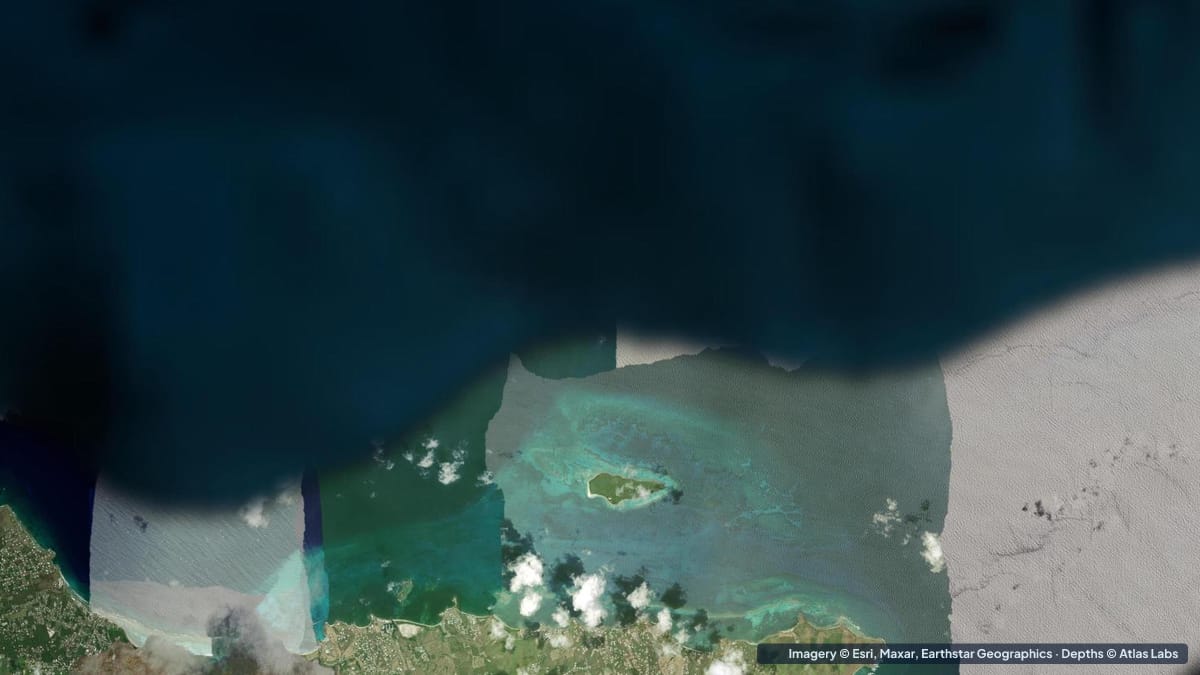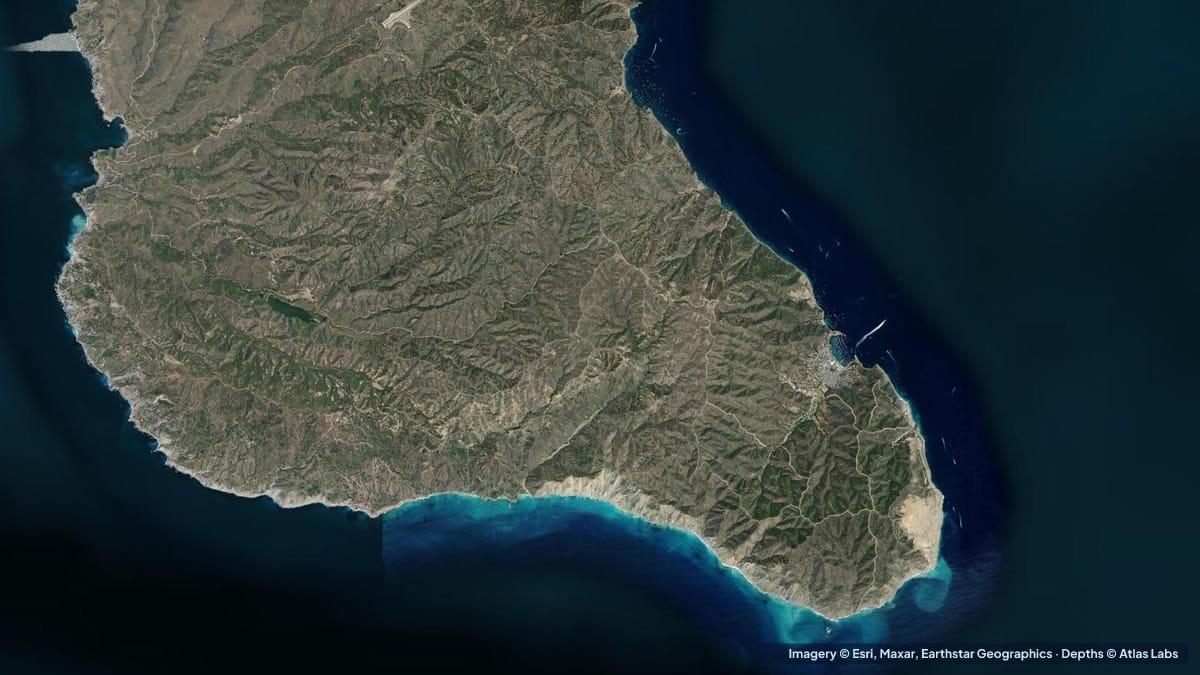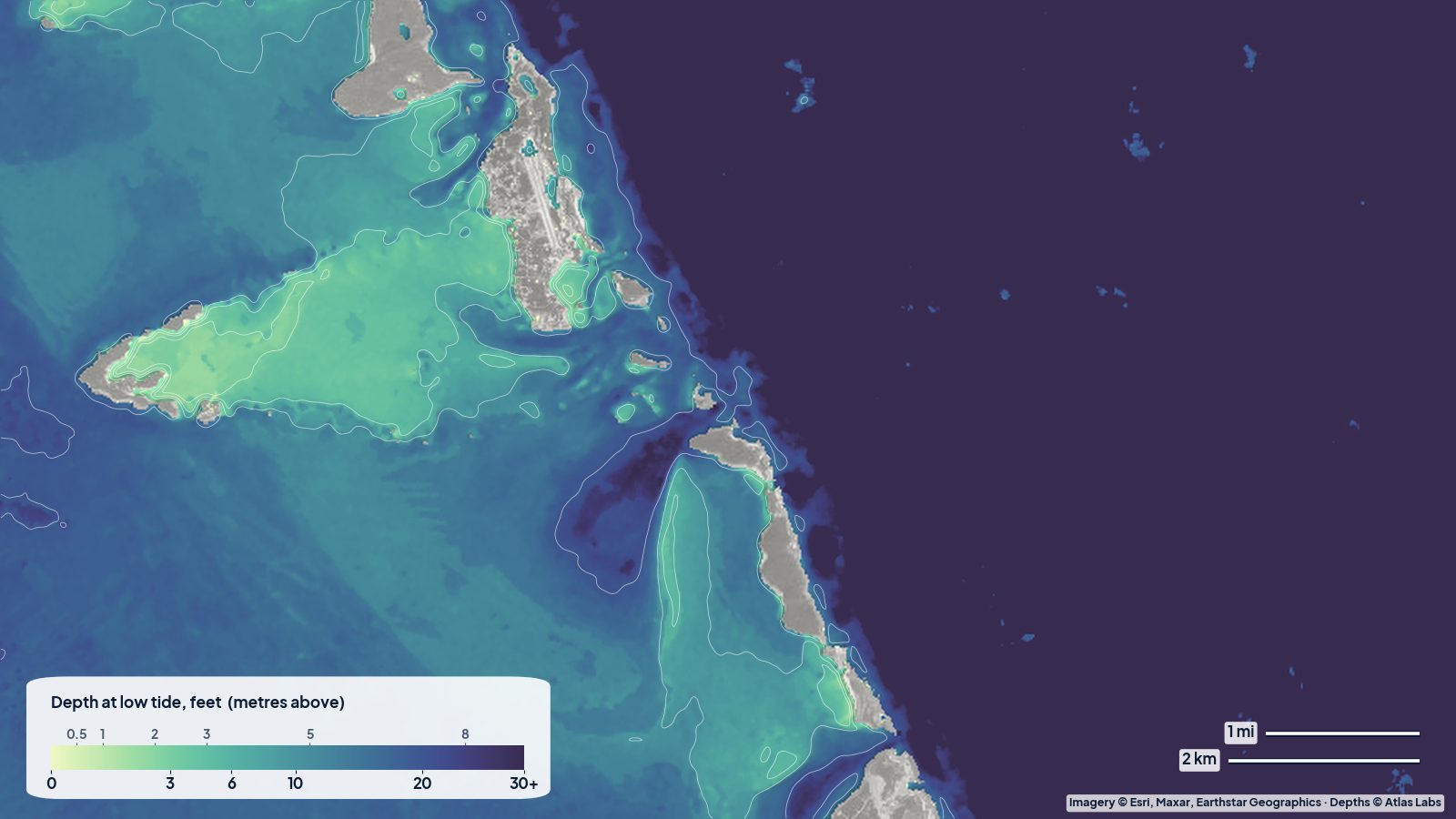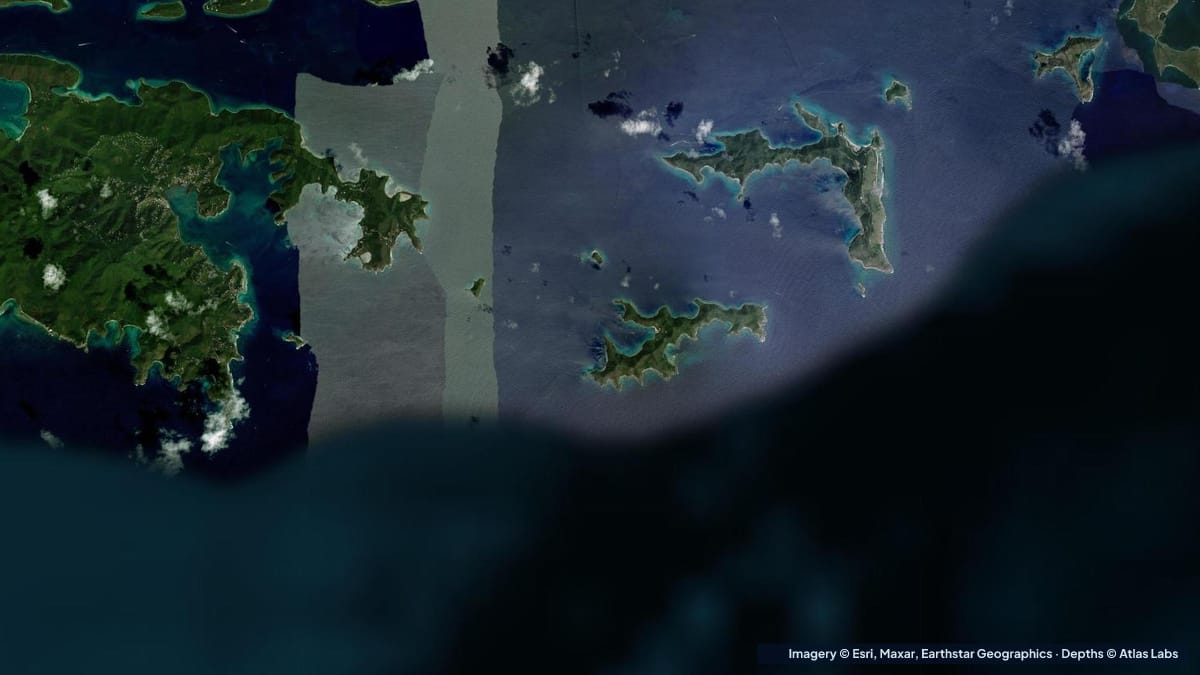
Two thirds of St John is Virgin Islands National Park, and its north shore is a string of protected bays with white sand, seagrass and fringing reef that shelve gently into clear water. Francis Bay is the quiet one at the end of the North Shore Road, past Trunk, Cinnamon and Maho: a long beach backed by a salt pond and mangroves, with a narrow reef in a sandy bottom and a mooring field used by cruising yachts. Next door, Maho Bay is the easiest turtle snorkel in the islands, and around the point Leinster Bay leads to Waterlemon Cay, one of the best shallow reef snorkels in the Caribbean. This guide gives typical depths, access, conditions and hazards for all of them. The satellite depth map for this cell is updated regularly.
What the bottom looks like
- Francis Bay: sand close to shore, then seagrass, with a varied, narrow reef along the rocky western (left) side in shallow water and a sandy, gently deepening centre where yachts moor. Mangroves and a salt pond behind the beach draw birds.
- Maho Bay: a shallow, sandy bay with extensive seagrass where green turtles graze a short swim from the beach; calm on almost every day.
- Leinster Bay and Waterlemon Cay: a long bay reached by a shoreline trail, with a small cay at its mouth ringed by a shallow reef of hard corals, sea fans and sponges, and seagrass between the cay and the shore.
- Cinnamon and Trunk bays: sand and patch reef; Trunk has the famous underwater snorkel trail in shallow water.
- Whistling Cay and Mary Point: rocky headlands with deeper reef and current, for experienced snorkelers and kayakers.
Approximate depth by zone
Typical ranges only. The tide here is small, around 1 ft (0.3 m). Swell from the north in winter changes the beaches more than the tide does. Check the live map.
- Francis Bay beach and reef edge: published descriptions put the western-end snorkel at about 8 ft (2.4 m) and the reef in 10 ft (3 m) or less; the centre of the bay deepens gradually to roughly 15 to 30 ft (4.6 to 9 m) at the moorings.
- Maho Bay seagrass: roughly 3 to 10 ft (0.9 to 3 m); turtles usually in 5 to 8 ft (1.5 to 2.4 m).
- Waterlemon Cay reef: roughly 5 to 20 ft (1.5 to 6 m) around the cay, shallowest on the shoreward side; the swim from the beach crosses seagrass in 6 to 15 ft (1.8 to 4.6 m).
- Leinster Bay centre: roughly 15 to 30 ft (4.6 to 9 m) at the moorings.
- Trunk Bay snorkel trail: roughly 5 to 15 ft (1.5 to 4.6 m).
- Whistling Cay and the point: roughly 15 to 40 ft (4.6 to 12 m) with current.
Access, launches and moorings
- Francis Bay: free parking at the end of the paved road and a short boardwalk through the mangroves to the beach; carry-in launch for kayaks and paddleboards. No facilities beyond a restroom.
- Maho Bay: roadside parking along the beach, rentals of kayaks and paddleboards in season, food trucks across the road.
- Leinster Bay: park at the Annaberg plantation ruins and walk the shoreline trail (about 0.8 mile, 1.3 km) to the Waterlemon beach; carry-in only.
- Cruz Bay and Coral Bay: the island’s harbours, with the ferry from St Thomas, dinghy docks and boat rentals; no public trailer ramp of note for visitors.
- National park moorings: Francis, Maho and Leinster bays have park mooring balls (fee); anchoring is prohibited in most of the north shore bays to protect seagrass and coral.
Best tide, wind and season
- Tide: Minor. Snorkel whenever the light is good; mid-morning to early afternoon gives the best visibility.
- Wind: The trade wind blows from the east and the north-shore bays are sheltered by the island’s ridge. Winter north swells (December to March) can make Francis, Maho and especially Trunk choppy and cloudy for a few days at a time.
- Season: December to April is the busy, dry, pleasant season. Summer is hotter and much quieter, with glassy water and the best snorkeling visibility. Hurricane season peaks August to October.
Hazards
- Boat traffic and dinghies: The mooring fields at Francis and Leinster bays are busy with cruising yachts and their dinghies; stay inside the swim buoys and wear bright colours when kayaking.
- Current at Waterlemon Cay and the points: It can run surprisingly hard around the cay and off Mary Point; keep an eye on your drift and snorkel the shoreward side first.
- Sea urchins and fire coral: On the rocky edges and the shallow reef; look, do not touch, and do not stand on coral.
- Sun, heat and the walk: The Leinster Bay trail is hot and has no water; carry plenty.
- Protected area rules: No anchoring in seagrass, no touching coral or turtles, no spearfishing inside the park.
Kayak and paddleboard guidance
Kayaks and paddleboards (4 to 6 in, 10 to 15 cm of draft) can go anywhere on the north shore in normal trade winds. Maho to Francis to Whistling Cay is a classic morning paddle with turtle and reef snorkeling along the way, about 2 to 3 miles (3 to 5 km) round trip. Leinster Bay to Waterlemon Cay is a short, sheltered paddle from the Annaberg side.
Visiting yachts and small boats drawing 3 to 7 ft (0.9 to 2.1 m) should use the park moorings in Francis, Maho and Leinster bays and stay out of the shallow seagrass near the beaches.
Frequently asked questions
How deep is Francis Bay?
About 8 ft (2.4 m) at the western end where beginners snorkel, with the reef in 10 ft (3 m) or less and the centre of the bay deepening to roughly 15 to 30 ft (4.6 to 9 m) at the moorings.
Where are the turtles at Maho Bay?
Over the seagrass in roughly 5 to 8 ft (1.5 to 2.4 m) of water, a short swim straight out from the middle of the beach, usually in the morning.
How far is the swim to Waterlemon Cay?
A few hundred yards from the Leinster Bay beach across seagrass in 6 to 15 ft (1.8 to 4.6 m). Watch the current and snorkel the shoreward side of the cay first.
Can I kayak at Francis Bay?
Yes, carry in from the parking area. Rentals are available at Maho Bay next door in season.
Can boats anchor in Francis Bay?
Anchoring is restricted; use the National Park Service mooring balls and pay the fee.
Related reading
Safety note: ShoalScope depth maps are satellite estimates for planning only and are not for navigation. Follow Virgin Islands National Park rules, use moorings, and never snorkel alone.